Outdoor yoga: what to know first
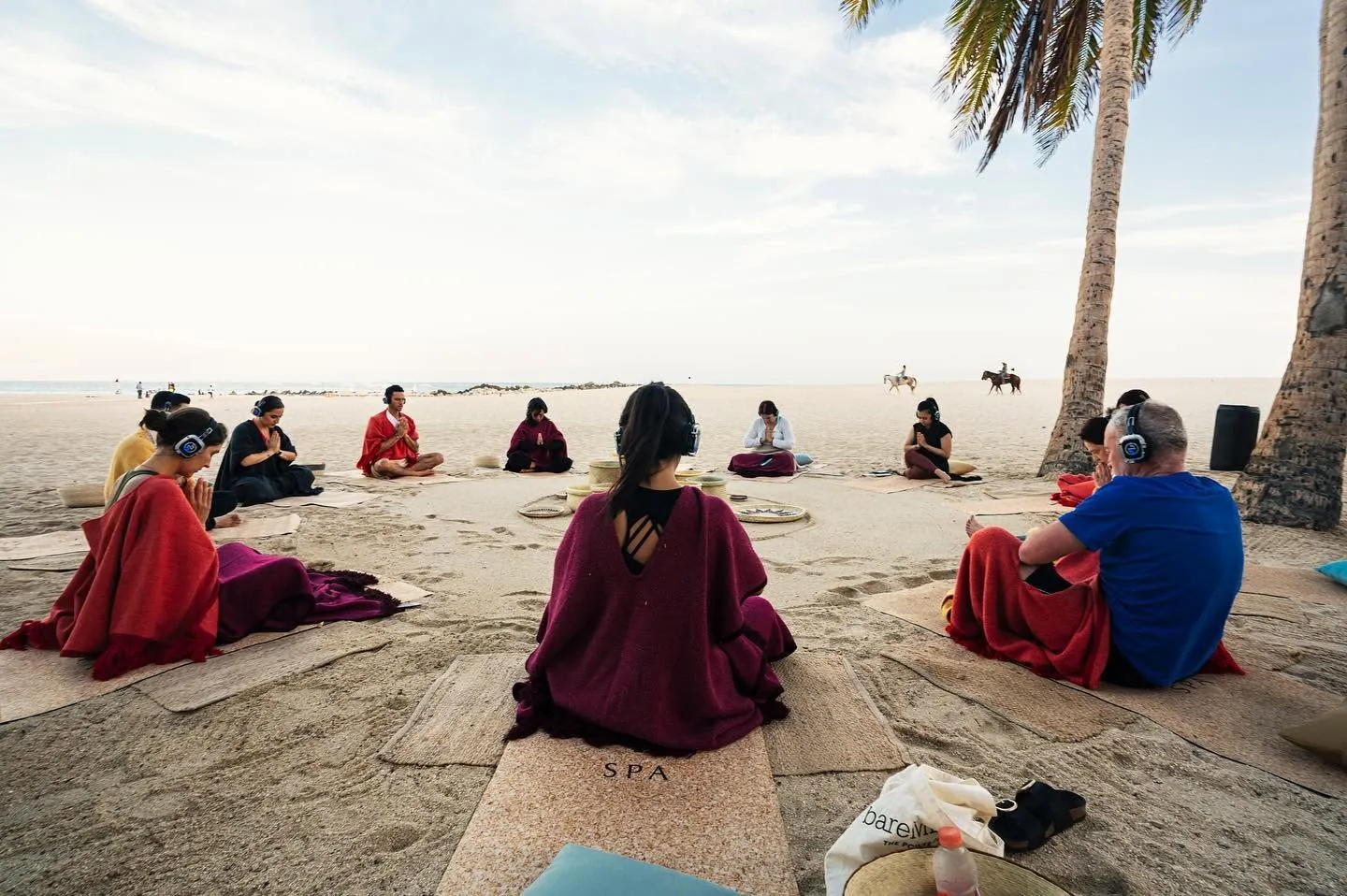
Practising outdoors is one of the main reasons teachers choose headphones. Leaving the studio brings a few practical questions: here they are, in order.
Choosing the spot
Look for flat, even ground, ideally short grass or a deck. Check where the sun will be at class time: in summer shade becomes essential by mid-morning. A recognisable landmark, such as a tree or an entrance, helps participants find you.
Permits and local rules
Parks, beaches and squares have different rules from town to town: some group activities need a permit or a fee for using public land, others do not. Ask whoever manages the space before announcing the class. Headphones do not replace a permit, but they remove the most common problem: noise.
Weather and plan B
The headphones are not designed for rain. Always have a backup date or a covered space, and tell participants in advance how you will notify them in bad weather. On hot days keep headphones and transmitter in the shade until you hand them out.
Light, sunrise and sunset
Sunrise and sunset classes are the most evocative, and often the quietest. As the light fades the headphone LEDs look stunning; when relaxation begins, switch them off for a calmer atmosphere.
Distance and movement
Outdoors, portable transmitters reach up to 300 metres without obstacles: you can move freely among the mats. For walking meditation keep the transmitter with you and walk ahead of the group.
Everything about outdoor classes in outdoor yoga in headphones.
Your list for going outside
Check the sun at class time.
Ask whoever manages the space before announcing the class.
Or a covered space in case of rain.
Until you hand them out.
Take your practice into headphones
Tell us where you practise, when and with how many people: you get a tailored proposal within one working day.